Înapoi la știri
The harder you work for something, the better the dopamine response - CNN
1 oră în urmă
16 minute min
Simona Stan
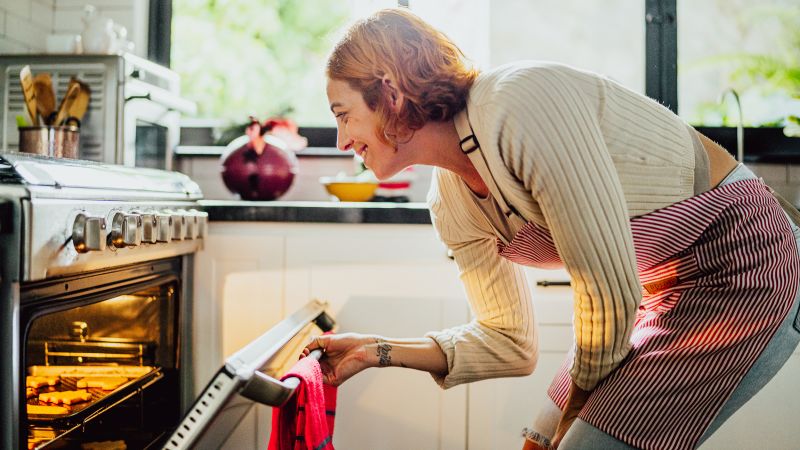
Think there’s nothing better than a chocolate chip cookie? But which chocolate chip cookie? Not all cookies are created equal, and it’s not always about the sugar content. Let’s try two different examples of the same thing. First, you sit down with a sleeve of your favorite store-bought cookies in front of the TV. You have one, and it’s delicious. Then another. Then another. Before you know it, the sleeve is gone, and you find yourself thinking of rummaging around the kitchen again. In an alternate universe, your dad sends you Grandma’s famous cookie recipe, and you decide to embark on a baking adventure. You gather the ingredients, restart when you learn you messed up a step and delicately add the decorative glaze at the end. When you are done, you sit down with two perfect specimens, and not only do they taste delicious, but you are proud and feeling nostalgic about your grandmother baking these for you. You save the rest for later –– maybe for when your sister comes over. Both cookies have the sugary goodness that sends a dopamine rush in your brain, but one is better in the long run, and that’s the one you had to work for. Dopamine can get a bad rap in popular culture these days, as it is often associated with attention problems and screen addictions, but it is not the enemy, said Dr. Anna Lembke, professor of psychiatry and behavioral sciences at Stanford University School of Medicine, chief of the Stanford Addiction Medicine Dual Diagnosis Clinic and author of “Dopamine Nation: Finding Balance in the Age of Indulgence.” The problem is that your brain is getting overloaded with dopamine by things all around you, such as social media, processed foods and bingeable TV shows. The solution may be to try to get your dopamine from sources that require a little more effort on your end. What is dopamine? Think of your brain as a system of electrical circuits. Neurons are wires that send electrical signals, allowing for information to be processed in the brain, Lembke said. Dopamine is one type of neurotransmitter, which is a kind of chemical that carries messages from one neuron to the next, according to the Cleveland Clinic. Dopamine has many functions, but it is thought to be a key player when it comes to experiencing pleasure, reward and motivation, Lembke said. The levels of dopamine released have been used by neuroscientists to measure how reinforced a substance or behavior will be. When dopamine is released, “that tells our brain, ‘Oh, that’s something you need to do more of. That’s important for survival,’” Lembke said. Reward, motivation and pleasure are good. The problem starts when too much dopamine is released all at once and the system becomes overwhelmed, so the brain must adapt by lowering dopamine moving across neurons, Lembke said. Over time, doing so can mean that your baseline level of joy is set lower to accommodate those big dopamine bursts. Having a lower point of joy may mean you feel the need for more substances or behaviors that release big amounts of dopamine to feel any pleasure at all, she added. “And when we’re not using, we’re experiencing the universal symptoms of withdrawal from any addictive substance or behavior like anxiety, irritability, insomnia, dysphoria and craving,” Lembke said. All kinds of things release dopamine. It could be the addictive things we are familiar with, such as alcohol, drugs, cigarettes and gambling. But healthy behaviors such as seeing a friend, engaging in a hobby or exercising stimulate dopamine as well. And humanity has engineered some substances and behaviors to stimulate even more dopamine — think ultraprocessed foods and social media, Lembke said. “We’ve even taken healthy behaviors like exercise and ‘drugified’ them by counting ourselves and ranking ourselves and adding in social media and social comparisons,” she added. Why working for it makes a difference Powerful hits of dopamine are available all the time — without a lot of effort or resistance, referred to as friction. Bored? Open your phone, and there is a game with colors, lights and sounds that draws you in without having to think much. Feeling disconnected? Scroll through social media —there is a never-ending feed of interesting posts and videos that you can skip past whenever you see anything upsetting or uninteresting. While these things can spur a large supply of dopamine, they also have a higher likelihood of becoming addictive, Lembke said. The potency, or how much dopamine is released, and the speed of release affect addiction, but so do access and exposure. “The more dopamine hits the brain gets, the more likely it is to change and adapt in a way that can create a disease of addiction,” she said. But a lot of the things that are worthwhile aren’t so easy. How can reading a good book compete with an attention-grabbing TikTok video? Alternatively, research suggests that the more you work for something, the more you enjoy it, said Dr. Neir Eshel, assistant professor of psychiatry and behavioral sciences at Stanford School of Medicine. In his research, even when the reward stays the same, the dopamine response was greater when a subject had to work for it. The higher response to the reward might have to do with the interaction between dopamine and acetylcholine, another neurotransmitter that plays a role in memory, arousal and attention and that may have a role in promoting effortful behavior, Eshel said. It’s hard to say exactly why working harder makes the reward feel better, but researchers have hypotheses. One is that it makes evolutionary sense to have a system that rewards people for working hard for resources in times when resources are scarce, he said. Think about the view from the top of a mountain, Eshel said. No matter how you got there, it looks the same, but people tend to enjoy the moment more when they hiked, rather than drove their car, to the top, he said. Other neurotransmitters that make you feel good and connected, such as serotonin, oxytocin and endorphins, also make a difference in how long you can sustain a good feeling from a reward before you are on to the next, said Dr. Nidhi Gupta, a pediatric endocrinologist in Franklin, Tennessee, and author of “Calm the Noise: Why Adults Must Escape Digital Addiction to Save the Next Generation.” Scrolling social media may be tied to hits of dopamine, but it doesn’t always leave you feeling bonded or happy. Doing so doesn’t really trigger the feel-good hormones oxytocin, serotonin and endorphins, Gupta said. Meeting a friend for coffee or learning a new creative hobby takes effort but also stimulates those three feel-good hormones that outlast the dopamine hits. Add a little friction Many people may find themselves in a loop of going back to those low-effort dopamine overload sources over and over again. As a psychiatrist, Eshel sees patients frequently who complain of a lack of motivation and energy. He said he worries that without putting in effort — reading a book, making plans to meet a friend, taking a walk — to get the reward, people will descend further into an apathetic state. The healthier solution may be to pay for your dopamine hits up-front, Lembke said. Things that require sustained, effortful engagement stimulate a pathway for dopamine that is less vulnerable to addictions, she said. Exercise, for example, is a great way to pay for your dopamine up-front. While it can be used in an unhealthy way, the energy it takes to put on your sneakers, get to the gym and go through the slog of warming up can make the reward you get afterward feel better and more sustainable. Sometimes that means just starting on a difficult task, such as pushing yourself to get back into painting instead of picking your phone back up, even when it feels unpleasant — or even impossible, Eshel said. Starting with something easy is OK and even preferred. “It can start a virtuous cycle in which you can start small and get bigger and bigger in terms of your ability to get motivated and to start tasks and to finish them,” he said. If you would like to read more, but can’t focus after so much time scrolling, maybe start with a small goal to read five or 10 pages a day. Perhaps your effort will snowball. Exercising, socializing and learning a new skill are things that yield all kinds of good feelings, but they take a little effort from you first. Dopamine regulation is specifically tricky for people with neurodivergences such as attention deficit hyperactivity disorder, but strategies that help people with those concerns can work for anyone, said Eric Tivers, a licensed clinical social worker in Glenview, Illinois. Planning how you want to get your dopamine hits when you aren’t feeling bored is like making a grocery list before you are starving in the grocery store and grabbing whatever you can, Tivers said. He recommends practices such as meditation and mindfulness to put some space between your desire to engage in something that doesn’t feel like a good source of dopamine and you acting on it. Lembke also recommends making it more difficult to access the things that give you too much dopamine and keep you hooked. Maybe that means not keeping highly processed foods in the house or using apps to limit your screen time. Adding in a little friction, some difficulty to get to the reward, may give you a more sustainable good feeling and keep your brain from trying to chase those quick, cheap hits.